

New Jersey Public Health Council Calls for Closing the “Smoking Loophole” in Atlantic City Casinos
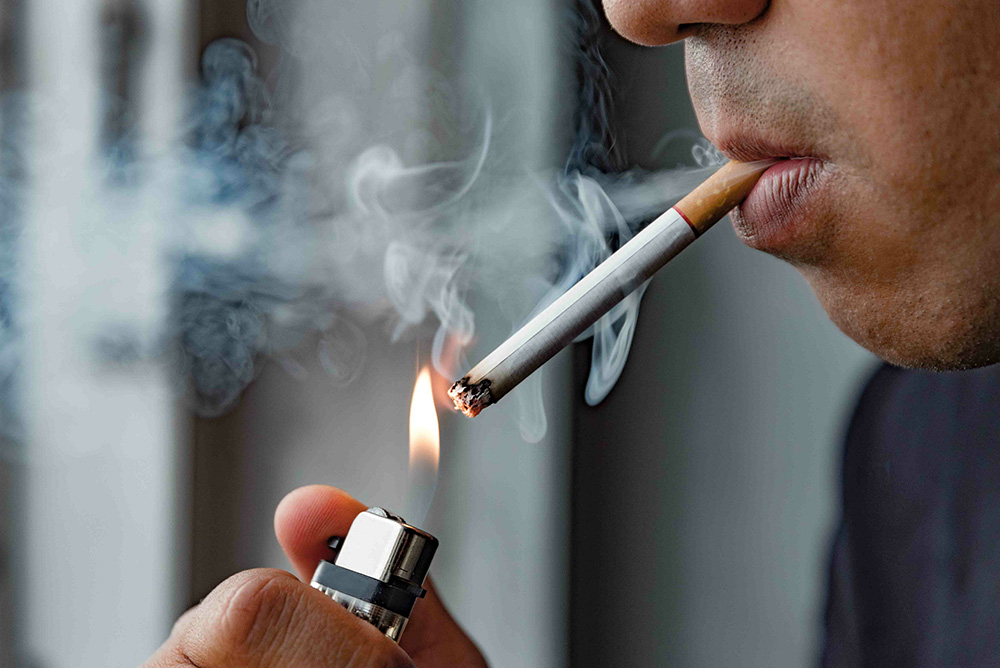
The New Jersey Public Health Council voted to adopt a resolution urging Health Commissioner Raymond E. Washington to support a full indoor smoking ban at Atlantic City casinos. The initiative aims to eliminate a legislative exemption that has allowed gaming establishments to maintain smoking areas for decades.
New Jersey has a general ban on smoking in enclosed workplaces; however, the Smokefree Air Act of 2006 includes an exemption for Atlantic City casinos. Under this provision, establishments are permitted to designate up to 25% of their gaming floors as areas where patrons may smoke.
A Vote That Could Be a Game-Changer
At a meeting held last week, council members unanimously approved a draft resolution addressed to the state Department of Health. The document emphasizes that, despite ongoing legal and legislative battles, the need to protect casino workers from secondhand smoke remains urgent. The council characterized the issue as a direct matter of public health.
“We Are Waiting for a Response from the Authorities”
Council Vice Chair Paul Roman noted that the debate over smoking in casinos has been ongoing for years and has reached the courts on multiple occasions without producing a definitive resolution. “I would like the commissioner, drawing on the council’s recommendation, to publicly state his position and perhaps prompt legislators or the governor to take action,” Roman said.
Nicole Vitola on the Price Casino Employees Pay
Nicole Vitola has worked as a table games dealer in Atlantic City for many years. She is a co-founder of Casino Employees Against Smoking Effects (CEASE), an organization established to defend the rights of workers who are exposed to secondhand smoke on a daily basis.
The secondhand smoke problem in land-based casinos affects not only staff but also patrons. According to surveys conducted among players in 2025–2026, a growing number of customers cite tobacco smoke as one of the reasons they are switching to online platforms.
The popularity of the iGaming industry has become a factor that land-based casinos cannot afford to ignore. This is especially true now that these offerings have grown increasingly realistic. Live dealer games such as Lightning Storm by Evolution effectively replicate the atmosphere of a gaming floor without the associated health risks. The authors of the review resource we found at click here noted that a significant portion of such shows’ audiences had migrated from the land-based segment precisely because of the discomfort caused by smoking on gaming floors.
For casino workers like Vitola, the situation is of course more complex: they cannot simply switch formats, as their livelihood is tied to a physical presence at the table.
In her testimony before the council, Vitola recounted having to work surrounded by tobacco smoke even during her pregnancy. Casino employees, she said, are forced to make an agonizing choice between keeping their jobs and protecting their health.
“For many years we have watched colleagues with whom we worked side by side for decades fall gravely ill, and in some cases die, from diseases linked to prolonged exposure to tobacco smoke. Pregnant employees and workers with chronic conditions are forced to choose between protecting their health and keeping their salary and health insurance,” Vitola stated.
While in African countries, including Nigeria, concern and legal disputes are primarily triggered by online betting, in the United States an increasing number of questions are being raised about land-based casinos — most of which have long demanded urgent resolution.
CEASE and Allies in the Fight for Smoke-Free Casinos
CEASE was founded in 2021, after Atlantic City relaxed its COVID-era restrictions on smoking in gaming halls. According to the organization, it represents the interests of thousands of casino workers. CEASE’s key demands of the Health Commissioner include:
– ceasing opposition to the organization’s lawsuit against the “smoking loophole”;
– supporting a bill to permanently ban indoor smoking in casinos.
CEASE is also backed by the union United Auto Workers and the organization Americans for Nonsmokers’ Rights.
Three Recommendations the Council Sent to the Department
1. Acknowledge that secondhand smoke in casinos disproportionately affects workers with moderate and low incomes, for whom changing jobs entails significant economic barriers.
2. Use state data to identify the extent of smoking-related illness among casino staff.
3. Advance smoke-free workplace policies without waiting for a final outcome from judicial or legislative processes.
Among the key medical risks of secondhand smoke, the council highlighted respiratory damage, cancer, heart disease, stroke, and reproductive disorders.
Courts Without a Final Ruling and a Legislative Pause
The legal dispute over the “loophole” is continuing on multiple levels. The case is being considered, among other venues, by the New Jersey Supreme Court, though no final ruling has yet been issued. In parallel, bipartisan initiatives to ban smoking in casinos have been introduced in the state legislature. Former Governor Phil Murphy repeatedly expressed his readiness to sign such legislation, and current Governor Mikie Sherrill has publicly called on legislators to reach a decision. Nevertheless, the process has stalled at the level of the state legislature.
The Other Side’s Arguments
Some labor unions and the Casino Association of New Jersey oppose the ban. Their primary concerns relate to declining casino revenue, job losses, and reduced tax receipts for the state budget.
Two Tracks and an Open-Ended Outcome
In the near term, attention will be focused on the response of Commissioner Washington and the Department of Health to the adopted resolution. At the same time, court proceedings before the state Supreme Court will continue alongside efforts to advance a bill through the legislature. The question of smoking in Atlantic City casinos remains open until either a judicial ruling is issued or legislation is enacted.